Hydropower sites surrounded by 266 three-thousand-meter peaks

Inspiration, Energy, and Healing

Water is an ancient symbol of renewal, health, and strength—and arguably one of the Alps’ most precious treasures. In addition to glaciers and snowfields, Osttirol’s ancient mountain landscape is home to numerous springs known for their crystal-clear purity, which feed mountain lakes and streams. Many magical places by the water are not only an essential part of the natural landscape south of the main Alpine ridge, but also invite visitors to linger, find inner peace, and recharge their batteries. There, those seeking relaxation experience the primal power of this life-giving element firsthand and also benefit from the highest quality drinking water in this Austrian vacation region.

Liquid Happiness

At the Haus des Wassers in St. Jakob in the Defereggental—a visitor and research center in the Nationalpark Hohe Tauern—the significance of this elixir of life is conveyed in innovative ways. The interactive programs offered by the Water School for visitors of all ages aim to highlight its importance for the environment and health. “Water plays a key role in our quality of life,” explains Brigitte Eckle, a certified biologist and director of the center.


“Here, participants learn why it’s such a precious resource and that, without this miracle substance, nothing really works. We enjoy conducting analyses, flow measurements, and a wide variety of experiments with children. For adults, too, we offer numerous exciting lectures, workshops, and seminars in collaboration with the National Park Academy.”


Wasser
Refreshment from nature: In the “Land of Mountains” in Osttirol, Austria, there are numerous springs with excellent drinking water.

For Your Health

Drinking water in Osttirol is among the cleanest in Europe. The water hardness is about 3 °dH (degrees of German hardness), so it is considered soft and is thus nearly as pure as distilled water. By comparison, the average in Germany is 16 °dH, which—due to the high content of calcium and magnesium ions—can have a negative effect on the skin and hair and cause limescale buildup in pipes.


“The high-quality drinking water in Osttirol owes its quality to what is known as the Tauern Window. In this geological area, rock layers are exposed that are normally hidden much deeper in the Alps. They contain minerals that naturally filter and purify the spring water,” says Brigitte Eckle from the Haus des Wassers.

How Water Works Wonders

Therapists are also becoming increasingly aware of the healing properties of water. They emphasize the regenerative qualities of alpine springs, which have a positive effect on both body and mind. Deferegger healing water, in particular, helps treat a wide variety of ailments thanks to its unique mineral composition and is used in both traditional health practices and modern wellness programs.


Europe’s oldest treasure of healing water springs from a depth of 1,850 meters. This precious fossil concentrate matured for millions of years in the Tauern Mountains before it was finally discovered in 2004. The iodine-rich sodium chloride brine spa is effective in treating skin, bronchial, and joint problems.

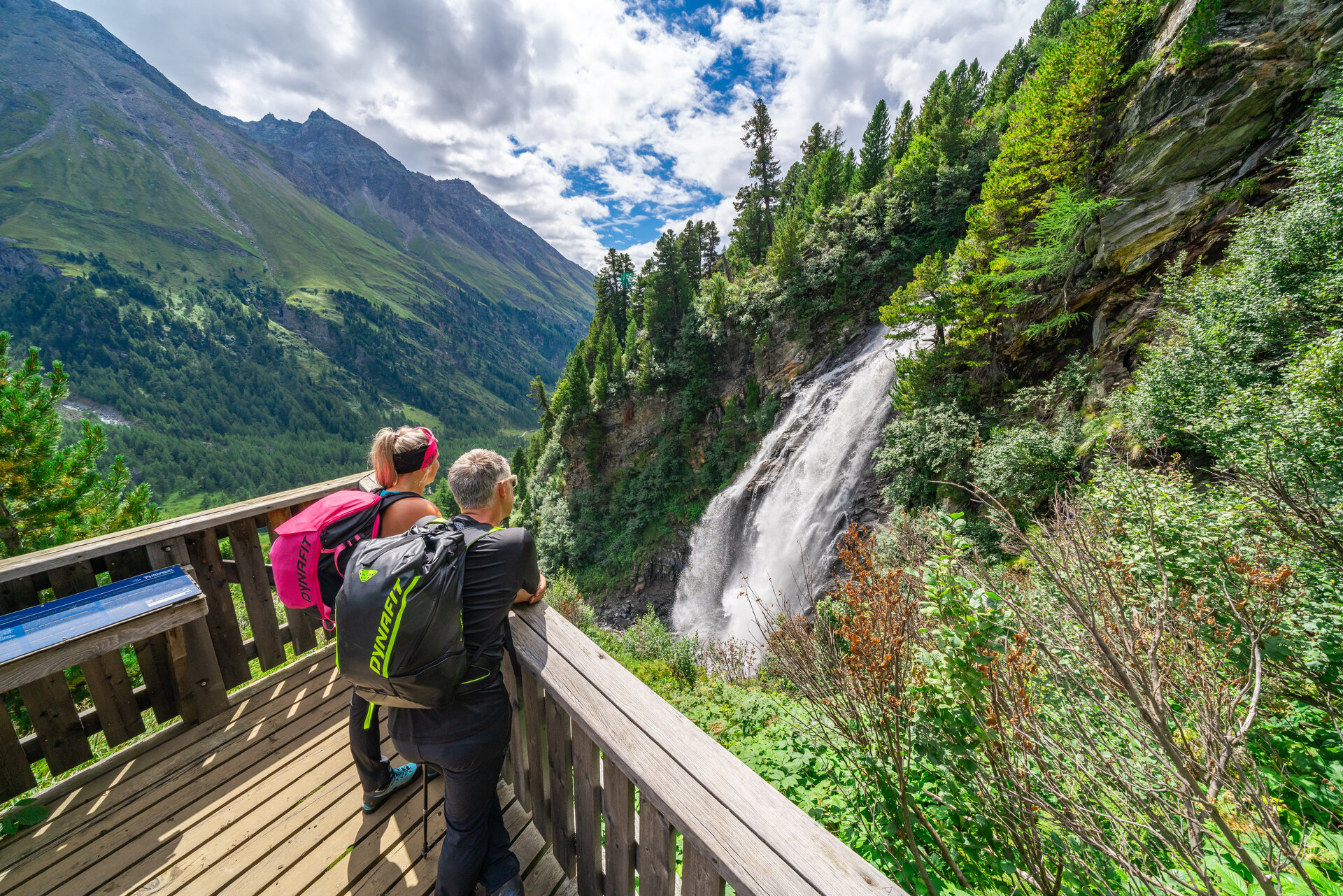
Weitwandern auf der Glocknerkrone in Osttirol, Etappe 2: Ein Wanderpaar betrachtet den Stotzbach-Wasserfall nahe dem Kalser Tauernhaus durch ein Fernglas.
In Osttirol, Austria, there are numerous roaring waterfalls that can be both invigorating and soothing.

Places of Power in Osttirol

With 21 glaciers larger than one square kilometer and Austria’s highest mountains, which boast abundant snow reserves—hardly any other region in the Alps offers as many opportunities for enjoyment, adventure, and relaxation by the water as Osttirol. Vacationers can experience the healing landscape up close on their excursions through unspoiled nature.


Springs, for example, symbolize change, purification, and renewal. People go there to let go of something, shake something off, and free themselves to embrace something new. Waterfalls, such as the 80-meter-high Hasslacher Schleierwaterfall in Kals am Großglockner or the Steiner Waterfall overlooking the Proßeggklamm—which opened in Matrei in Osttirol in 2024—on the other hand, pulsate with life, convey energy, and liberate. Scientific studies confirm their positive effects on stress and burnout. At


mountain lakes, on the other hand, you experience silence, vastness, and clarity. Lake Alkuser in Matrei, Lake Obstanser in Kartitsch, and Lake Laserz near the Karlsbader Hütte at an altitude of 2,260 meters are considered magical havens of peace. Mountain pools have a similar effect. It is said that at places of power, such as the Pfauenauge in St. Jakob in the Defereggental, heaven and earth meet.


Gazing into the still water guides the observer inward. Last but not least, mountain streams symbolize change—the only constant in life. Tip: If you’re hiking along the Isel, the longest still-free-flowing glacial river in the Alps, take the time to dip your feet in the cold water, observe, and simply feel the moment.

Newsletter

Subscribe to our newsletter and receive the best tips every month for current offers, mountain tours, events and much more.