More Than Just Walking: Long-Distance Hiking in Osttirol

When the Journey Is the Destination

Hike, eat, sleep, repeat: More and more people are shouldering their backpacks and leaving everyday life behind on multi-day hiking trips. Whether it’s Der Jakobsweg, a trek across the Alps, or the Pacific Crest Trail: Pilgrimages and the like have long since shed their dusty reputation and are climbing ever higher on people’s bucket lists —after all, it’s not simply a matter of covering the distance from A to B, but rather an inner dialogue, a break from stress and noise, and a journey back to oneself.


Step by step, long-distance hiking enthusiasts encounter nature, their own thoughts, and ultimately what truly defines them. Regional routes are also enjoying growing popularity. In Osttirol, the “Land of Mountains” south of the Alpine ridge, for example, you can walk the “Hoch und Heilig” pilgrimage trail toward your inner serenity.


The first steps often feel difficult. Your mind is cluttered, and the demands of daily life are still fresh in your mind. But the longer the journey, the calmer your thoughts become, and eventually the “long-distance hiking effect” sets in: a sense of inner lightness, clarity, and the feeling of being fully present in the here and now. Along the way, you gradually begin to slow down and recover from an increasingly complex, fast-paced world.


Osttirol is a paradise for such journeys of self-discovery: with its 266 three-thousand-meter peaks, the region is rightly considered one of Austria’s most popular (long-distance) hiking destinations. There, cultural landscapes cultivated over centuries blend with an impressive mountain backdrop, forming the unmistakable “Bergtirol”—a place of longing for hikers and nature lovers alike.
Hiking Tip: "Hoch und Heilig - Bergpilgerweg"

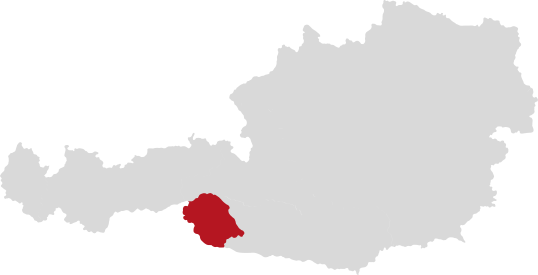
Over 200 kilometers, four national borders, 13,000 meters of elevation gain, and panoramic summit views galore: this is the “Hoch und Heilig - Bergpilgerweg.” “Hoch” stands for the summits, and “Heilig” for seeking and finding salvation. Winding through the alpine landscapes of Osttirol, South Tyrol, and Upper Carinthia, hikers traverse alpine pastures, peaks, and valleys over a total of nine stages, with each stage ending at a spiritually significant site.


The route runs from Lavant in Osttirol via San Candido (Italy) to Heiligenblut am Großglockner, passing important pilgrimage sites such as Maria Luggau, Kalkstein in Innervillgraten, Obermauern in Virgen, and hidden gems like the small Church of St. Korbinian in Assling. With an average of 20 kilometers and more than 1,000 meters of elevation gain per daily stage, “Hoch und Heilig” requires not only good hiking boots but also physical stamina and the ability to reflect. For along the way, hikers are meant to feel how profound small moments can be—whether it’s the scent of alpine meadows, the alpenglow at sunrise, or the sound of church bells in remote valleys.


The route combines long-distance hiking through varied mountain scenery with pilgrimage as an ancient practice of seeking meaning. Along the way, nature impressively shows us how irrelevant borders can be: plants grow without passport checks, animals move effortlessly between Austria and Italy, and the landscape remains equally impressive on both sides of the mountains. The region becomes a boundless space for adventure, where diversity does not divide but unites.

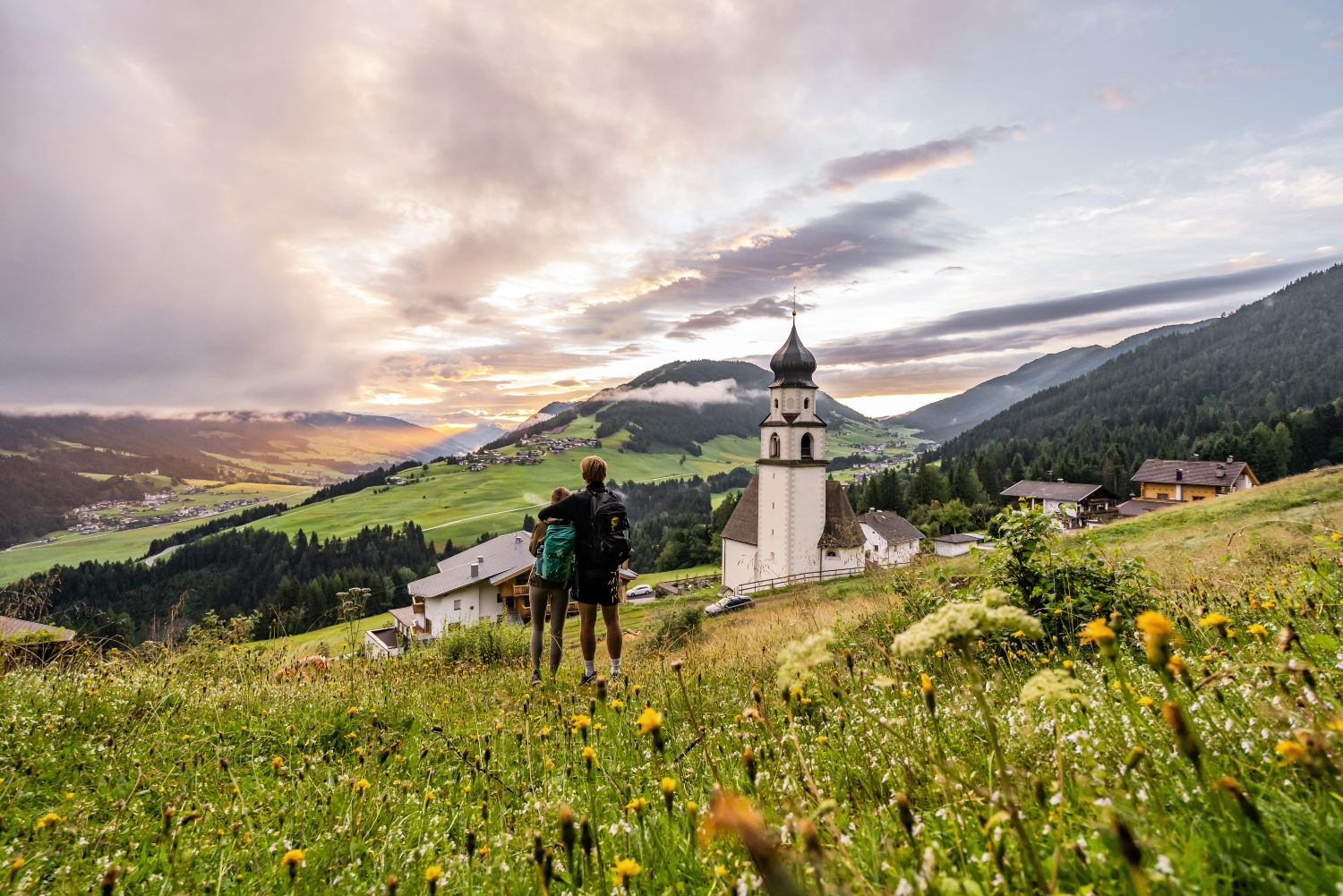
Etappe 4 - Hollbruck Kirche
Put on your hiking boots and leave everyday life behind: In Austria alone, there are more than 50,000 kilometers of designated hiking trails. Mountain lovers spend about 65 hours hiking along the “Hoch und Heilig” long-distance trail.

The Allure of Customized Multi-Stage Hiking

Whether you hike the entire trail or just select sections: Every traveler can decide for themselves which route to take on the “Hoch und Heilig - Bergpilgerweg,” whether planning it individually or joining an inspiring group led by certified mountain and hiking guides. Tailored hiking packages, including luggage transport, provide added convenience. The offerings also include overnight stays in certified pilgrim lodgings. Regular bus service makes getting to and from the individual stages incredibly easy.


The Osttirol Welcome Card even allows for free use of public transportation. The best time to visit is from June through October. For inspiration and guidance, there’s the pilgrimage booklet “Hoch und Heilig – Hiking Inward Across Mountains and Borders,” which offers not only practical tips but also spiritual insights and is available free of charge from the Osttirol Tourism Association or as a download at hochundheilig.eu.

Newsletter

Subscribe to our newsletter and receive the best tips every month for current offers, mountain tours, events and much more.