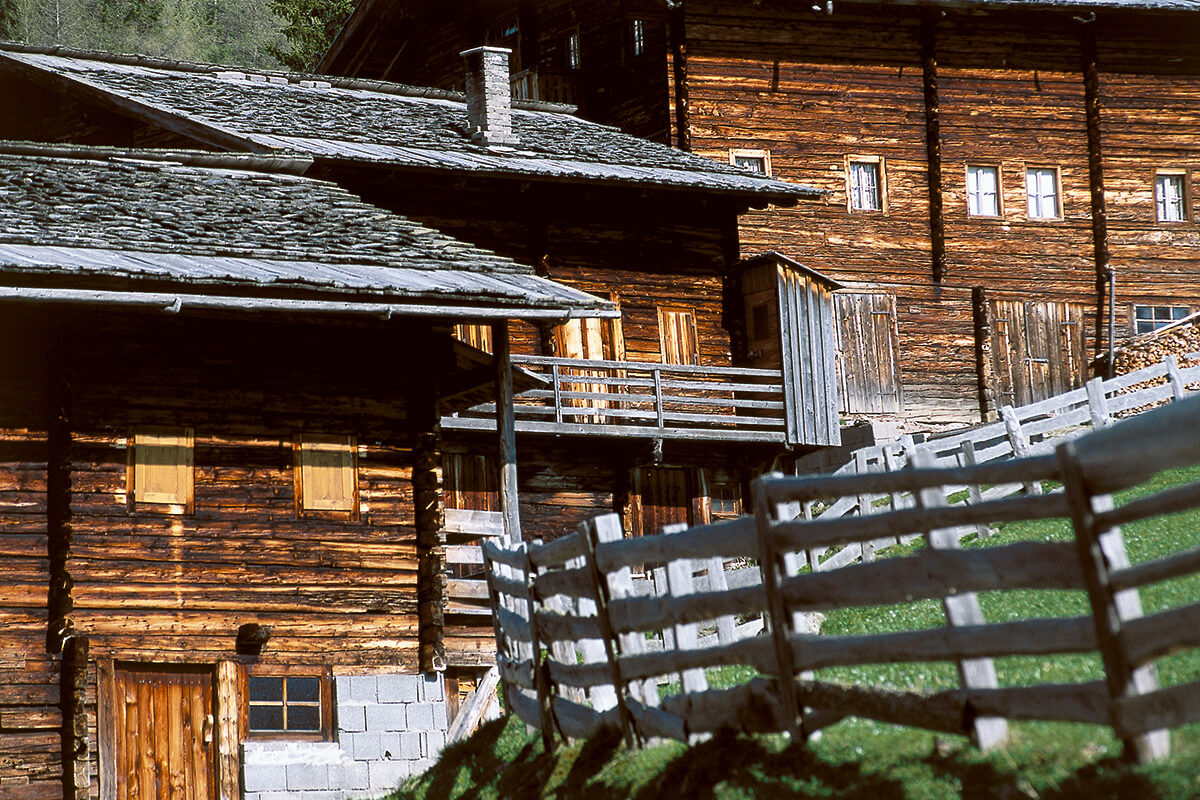
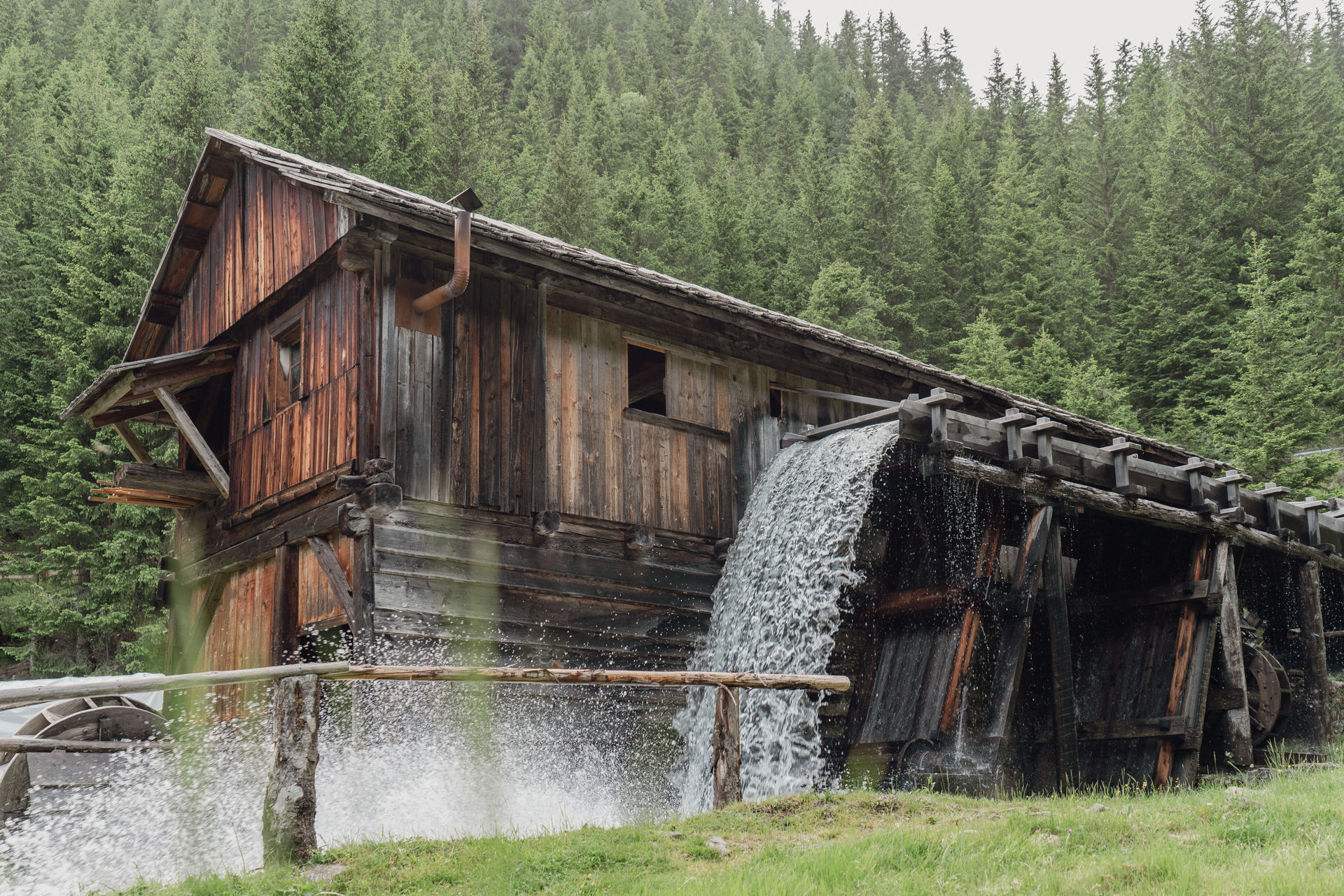
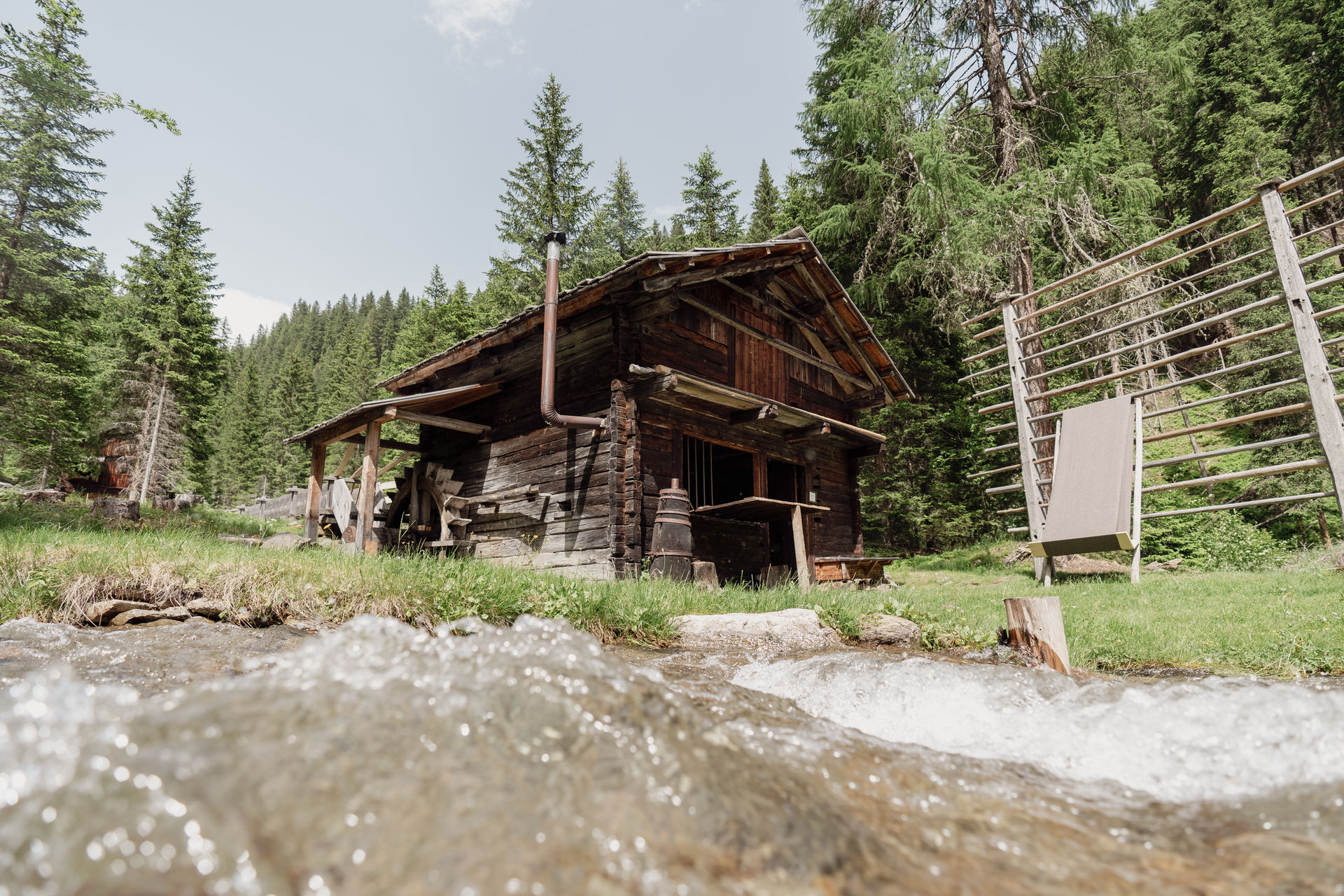
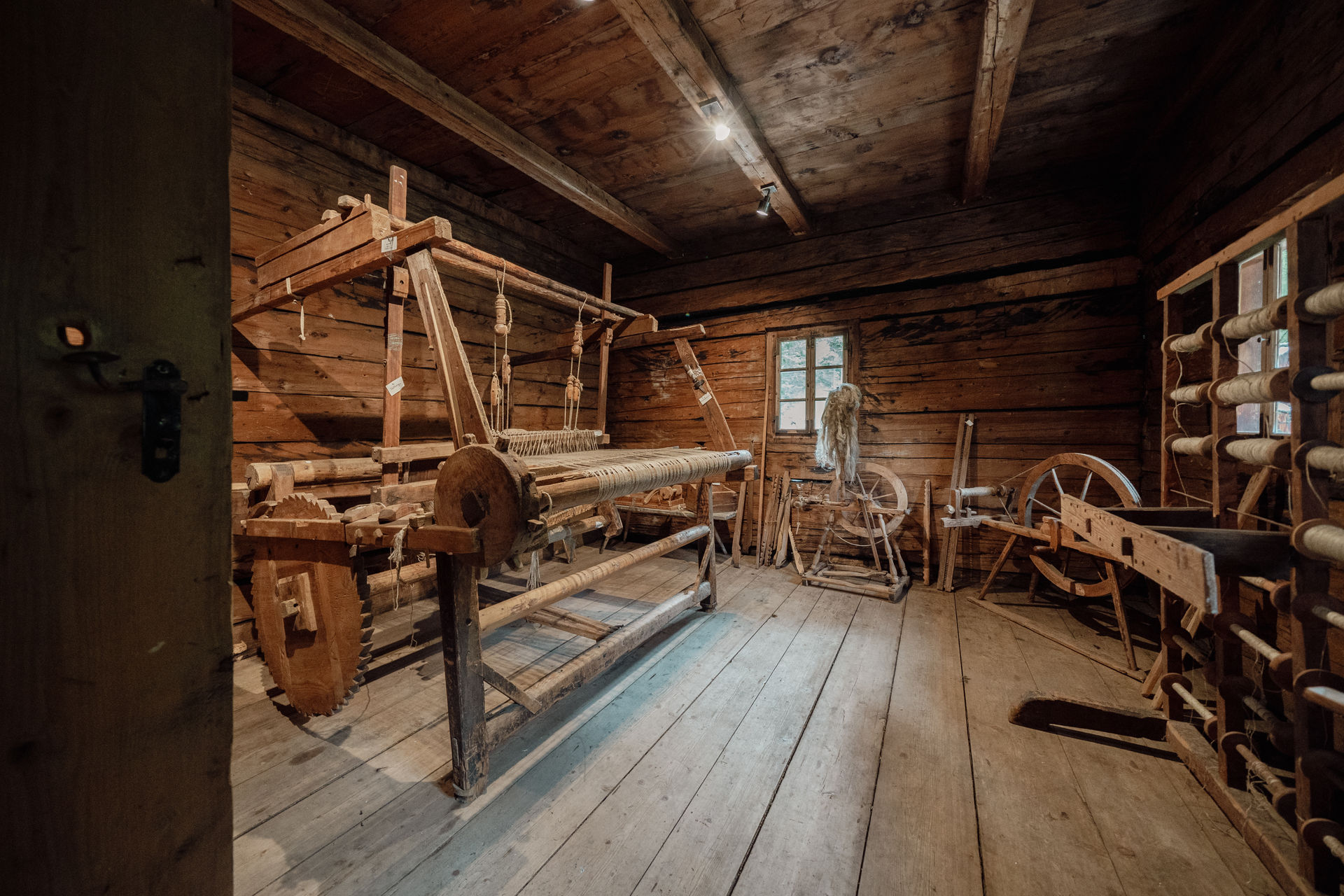
On the grounds of the open-air museum , life in the Alps—in all its facets, from challenges to crafts and traditions, and ranging from agricultural tools to wooden structures, hydropower, nature, and history— is vividly recounted, explored, and brought to life. The central elements are the various buildings, which serve as living testaments to the innovations and way of life of past Alpine eras. The exhibits, including a diverse collection of agricultural tools, also help to illustrate the connection between the past and the present. Visitors have the opportunity not only to see but also to feel and experience how the elements of water, wood, grain, and wool were used in times past.
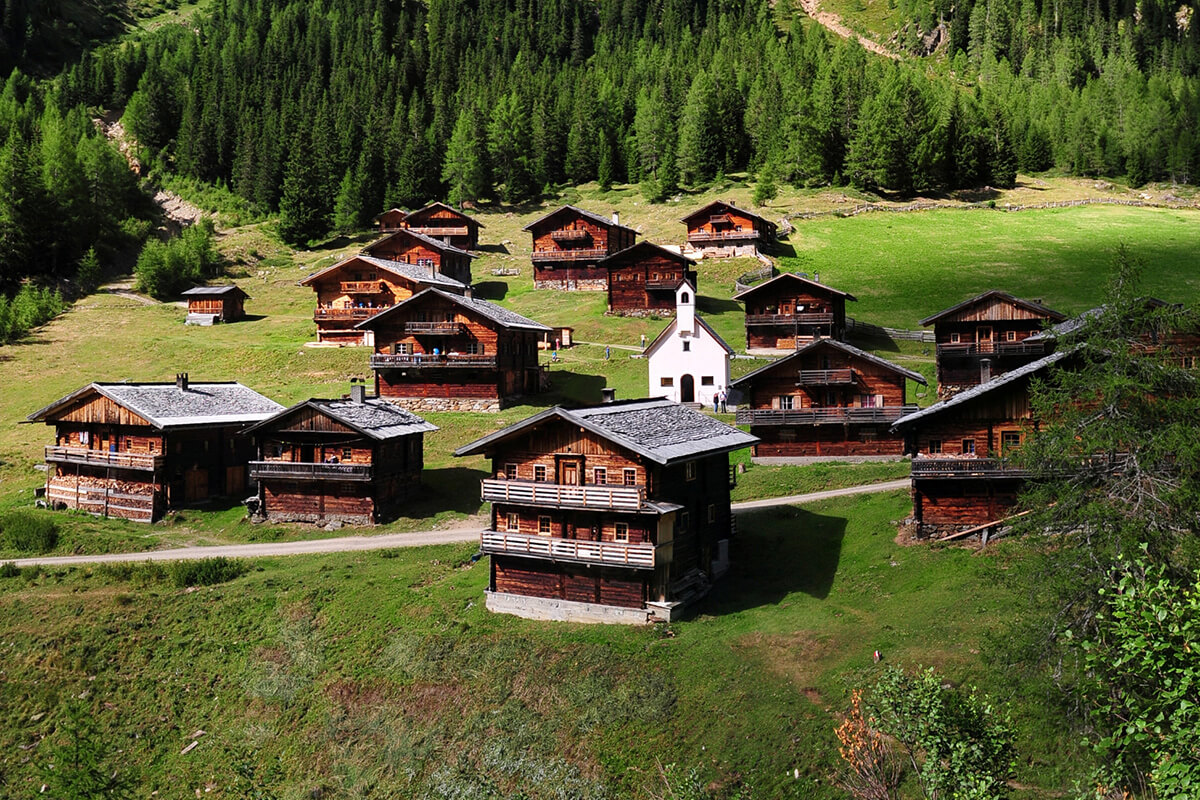
The Oberstaller Almen in Innervillgraten, a historic alpine village consisting of 16 rustic alpine huts and a Guardian Angel Chapel, date back to the 19th century and were partially renovated in the 20th century. Starting from the Unterstaller Alm, you’ll soon come upon the “Klapfbach Waterfall” viewing platform. You can see the 60-meter-high waterfall up close and even feel its power. You’ll be rewarded with a beautiful view of the highest peaks in the Villgratental: the Weißspitze (2,962 m), the Rotspitze (2,956 m), the Unterstalleralm, the Kamelisenalm, and the Roten-Kinkele.
After another 30-minute walk, you’ll reach this unique cluster of alpine huts, the Oberstaller Almen. There, you’ll find yourself far removed from the hustle and bustle of everyday life. You’ll hear the soothing murmur of the stream and be surrounded by a unique panoramic view.