Reach the Summit Safely and Happily

Spring Ski Touring in Osttirol

Starting in February, when the days grow longer and the early rays of the sun transform untouched slopes into butter-soft firn fields, Osttirol’s peak ski touring season begins. In this land of 266 three-thousand-meter peaks—half of which lie above 2,000 meters—fans of this popular winter sport will find pristine nature and high-Alpine mountain ranges stretching as far as the eye can see well into spring. In addition to numerous classic one-day and multi-day routes, this Austrian winter sports destination south of the main Alpine ridge offers huts open specifically for firn skiers. Thanks to local guides and marked trails, mountaineers can rely on safety and professional expertise. In an interview, Kals expert Vittorio Messini explains why planning must be adapted to external conditions, especially during the warmer months.

Day Trip: Diversity Between the Lienzer Dolomiten and the Hohe Tauern

One of the most beautiful ski tours in the Lienzer Dolomiten leads into the Laserzkessel around the Karlsbader Hut, with runs for all skill levels. From Tristach, you can reach the Kreithof parking lot and then enjoy a leisurely ascent past the Dolomitenhütte to the Karlsbader Hütte, which takes about three hours. From there, the Ödkarscharte at 2,600 meters offers a spectacular panorama and rewarding descents after an hour’s climb. The Defereggental Valley, with its reliable snow conditions, also offers numerous opportunities in the spring for beginners and leisurely ski tourers. From the starting point at Staller Sattel at 2,052 meters, the route to the Rote Wand begins. The Aussichtsberg (2,818 meters) can be reached via a wide, bowl-shaped area through the Ackstaller Valley. The ascent, covering 800 meters in elevation, takes about two and a half hours; the descent follows the same route back down into the valley.

The Spring Empress: A Multi-Day Classic with an Overnight Stay in a Mountain Hut

The Hoch-Tirol Ski Route is a six-day high-mountain tour in the Eastern Alps covering more than 18,000 meters of elevation gain and 140 kilometers, leading from Kasern in South Tyrol through the majestic peaks and glaciers of the Venediger region to the Großglockner, Austria’s highest mountain. This traverse is considered the “Empress” among spring ski tours, as by this time some huts are not only open with winter accommodations but also serve as base camps offering lodging and meals.


The route leads via the Umbaltörl to Osttirol and the Essener-Rostocker Hut, from where the Große Geiger (3,360 meters) is ascended. After spending the night at the Johannishütte, a climb of just under 1,500 meters in elevation leads to the Großvenediger (3,674 meters). The tour includes challenging descents into the Innergschlöss valley, followed by ascents to the Amertaler Höhe, Granatscharte, and Stubacher Sonnblick (3,088 meters). On the fifth day, the route heads to the Granatspitze (3,086 meters), before a steep descent leads to the Dorfersee and on to the Taurerwirt in Kals.


The grand finale is the ascent of the Großglockner (3,798 meters) on the sixth day from the Stüdlhütte, followed by the descent to the Lucknerhaus. Ski touring experience, climbing skills, and good physical conditioning are absolutely essential. In addition, it is recommended to be accompanied by an Osttiroler mountain and ski guide.

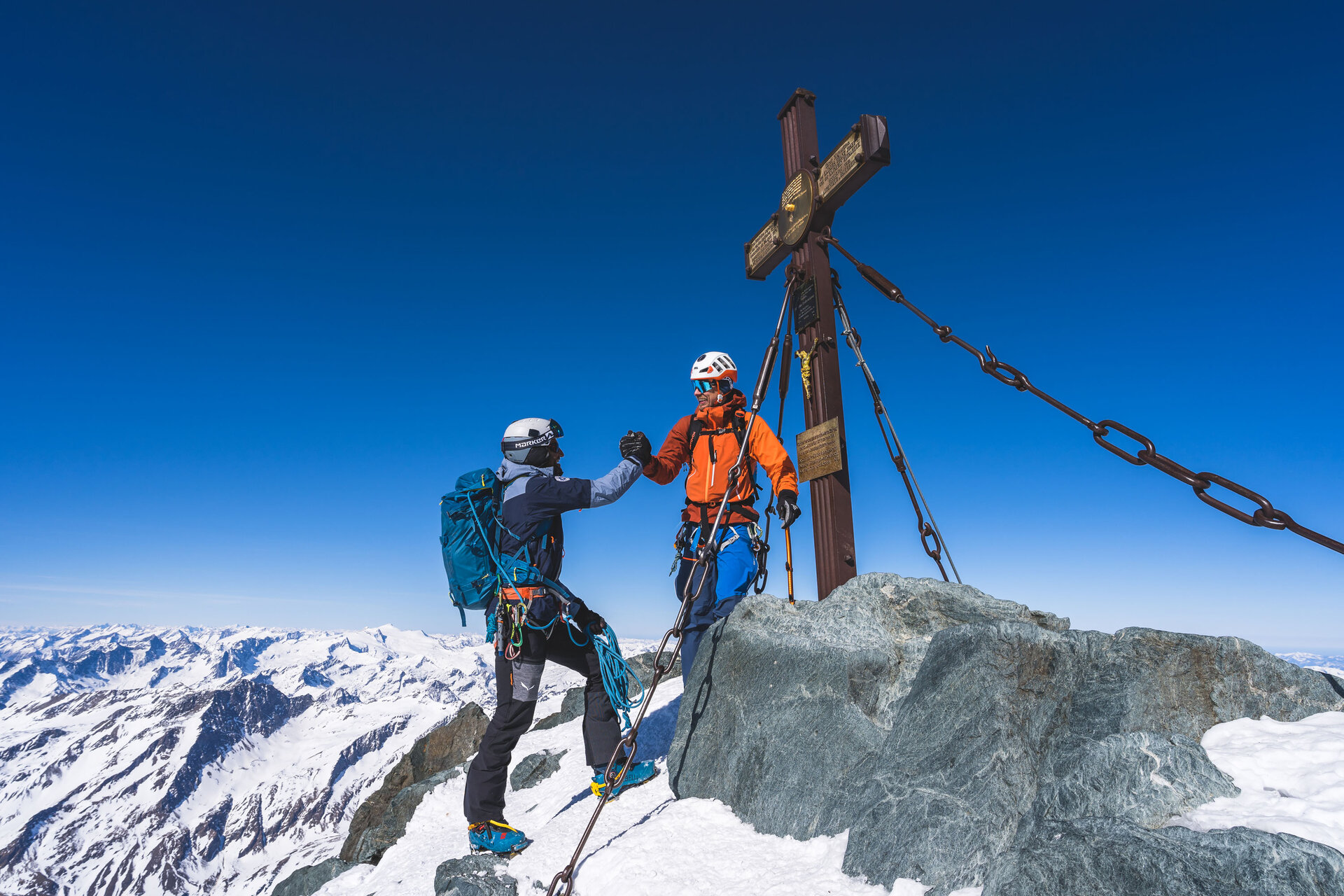
Zwei Skitourengeher:innen erreichen das Gipfelkreuz des Großglockners
The six-day "Hoch Tirol" ski tour, which begins in South Tyrol and passes through the Nationalpark Hohe Tauern in Osttirol, is challenging and requires excellent physical conditioning and technical skills. The final stage involves climbing Austria's highest mountain, the Großglockner, using crampons.

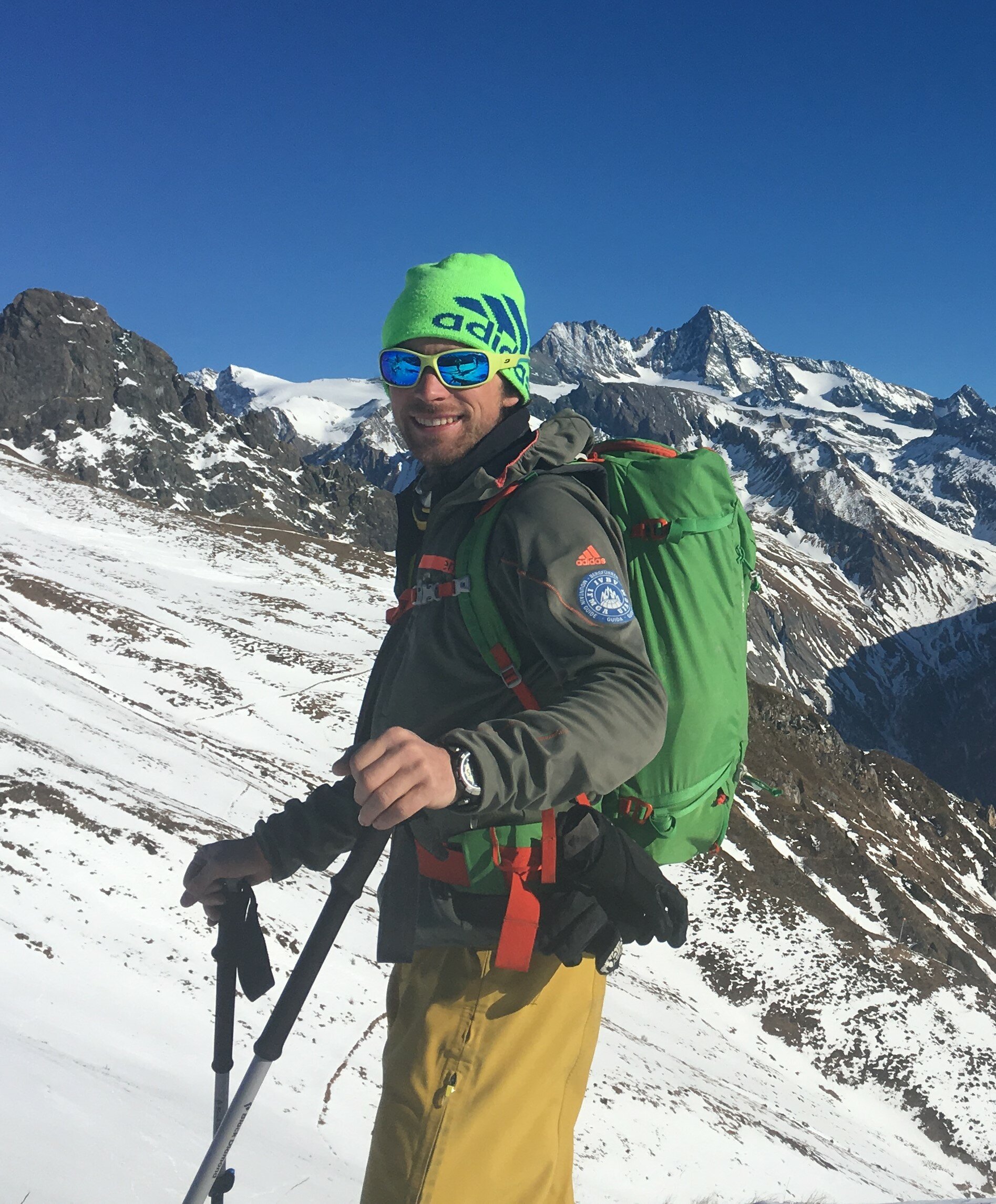
Three Questions for Mountain and Ski Guide Vittorio Messini: “Safety First”

What are the main differences between planning a ski tour in the middle of winter and planning one in the spring?

Vittorio Messini: The main difference is the time factor! In the spring, the day often begins a few hours earlier for ski tourers than in the middle of winter. Sometimes you even need to start with a headlamp, depending on the length of the planned tour. In the middle of winter, the sun is weak, which means the snow takes much longer to settle, especially on north-facing slopes. In the spring, however, this process happens much faster—sometimes even while it’s still snowing, thanks to stronger sunlight. Regardless of the season, avalanche danger and weather play a very important role; tour planning is usually based on these two factors, and only then is the destination decided. In Osttirol in particular, the period from February to the end of April is considered the best time for ski touring, as conditions there are usually optimal in the spring.

What should be in every ski touring backpack?


Emergency gear is essential regardless of the season and should always be in your backpack: an avalanche transceiver, shovel, and probe are part of the basic equipment. In the depths of winter, you should carry an airbag backpack. However, this is of little use in the spring when the snow is hard and crusty, as it offers no advantage in wet-snow avalanches. During the warmer months, crampons are important, as the ground is often hard and frozen early in the morning. It never hurts to have them with you, though, because sometimes summits or slopes are blown bare and icy by strong winds, regardless of the season. My other recommendations for the packing list: Don’t forget a ski touring helmet, sunglasses, a survival blanket, a bivy sack, a repair kit, a down jacket, a thermos, snacks, and a change of clothes.


What are the advantages of a spring ski tour compared to one in the middle of winter, both in terms of snow conditions and the overall experience?


That’s not an easy question to answer. Ascending through an idyllic, snow-covered winter landscape during the cold season and then skiing down untouched powder slopes is an incredible experience. Many people find the low temperatures rather unpleasant, as fingers and toes tend to get cold. I also really enjoy the time starting in March, when the days get longer again and the sun is already really strong. In Osttirol, we have 266 peaks over 3,000 meters and glacial landscapes offering countless possibilities well into late spring. Even in April and May, powder snow is possible on north-facing runs. Some huts open for ski tourers as early as March.

Newsletter

Subscribe to our newsletter and receive the best tips every month for current offers, mountain tours, events and much more.